
How to Use These
One prompt a day, in order. The order is deliberate. The first week is easy and concrete, the middle weeks go wider, and the last week is harder, because by then you will have built enough momentum to handle it.
Three rules that make the difference between a month of real entries and a month of filler.
Write specifically. Not my family. The thing your brother said on Tuesday, in his words.
Write badly. Nobody is reading this. Sentence fragments count.
Write briefly on hard days. Two lines is a complete entry. The consistency is the mechanism, not the volume.
Week One: Concrete and Close
Start with the physical and immediate. These are the easiest to answer and they train the habit of specificity.
- What did you touch today that felt good?
- What is something in your home that you would replace immediately if it broke?
- What did you eat this week that you enjoyed more than you expected?
- Which room do you like being in, and what is it about it?
- What sound in your daily life do you like?
- What did your body do for you today without being asked?
- What is the most useful object you own that cost under twenty dollars?
Free download
Weekly Planner Templates
Four printable pages to bring your week back into focus — a weekly overview, intentions and gratitude, a habit tracker, and a weekly reflection. Undated, so you can print them again every week.
Week Two: People
Harder, and much more rewarding. Push for specific moments rather than general appreciation.
- Who made something easier for you this week, and how?
- Who knows a version of you that nobody else does?
- What did someone say to you once that you still use?
- Who would you call at two in the morning? Do they know that?
- Who taught you something you use constantly without thinking about them?
- What is a friendship that survived something?
- Who has forgiven you for something?
The prompts that keep working are the specific ones, which is exactly what a blank page will not give you. The The Gratitude Journal supplies a different prompt for each day, so you are not writing family and coffee for the eleventh time.
Week Three: The Year
November is late enough to look back. These take longer and are worth the extra ten minutes.
- What is something you can do now that you could not do in January?
- What went right this year that you have not given yourself any credit for?
- What did you survive?
- What did you say no to, and what did that no protect?
- What ended this year that needed to end?
- What is the best decision you made this year? It can be small.
- Where did you show up when it would have been easier not to?
Week Four: The Difficult Ones
These go into harder territory. If a day is already bad, skip ahead and come back.
- What are you grateful for that you did not want at the time?
- What did a difficult person teach you, however unwillingly?
- What did losing something give you room for?
- What are you grateful to no longer be?
- What ordinary day would you go back to if you could?
- Who is gone that you are still glad you knew?
- What are you grateful for that you are slightly embarrassed by?
- What has been hard this month, and what is also true alongside it?
- Read back through this month. What surprised you?
If November Is a Hard Month for You
For a lot of people it is, and a month of enforced gratitude can make a hard season worse by adding a sense of failure to it.
Two adjustments. First, use the both-things format on any day you need it. Write what is hard first, in full, and then write one thing that is also true. Not instead. Alongside. The refusal to pretend is what keeps the practice honest enough to continue.
Second, drop to noticing on the worst days. Skip gratitude entirely and record one neutral observation about the day. The underlying skill is attention, and attention is available even when warmth is not.
The Reread, Which Is the Actual Point
On the last day of the month, sit down and read all thirty entries in one go.
This is the part nearly everyone skips, and it is where the effect lives. A single entry does almost nothing. Thirty entries read together produce something specific: a picture of a month that you would otherwise have remembered as fine, or as hard, and nothing else.
Most people find at least three or four things they had already completely forgotten, from within the last four weeks. That is the argument for the whole practice, and it is more persuasive than anything anyone can tell you about it.
From the shop
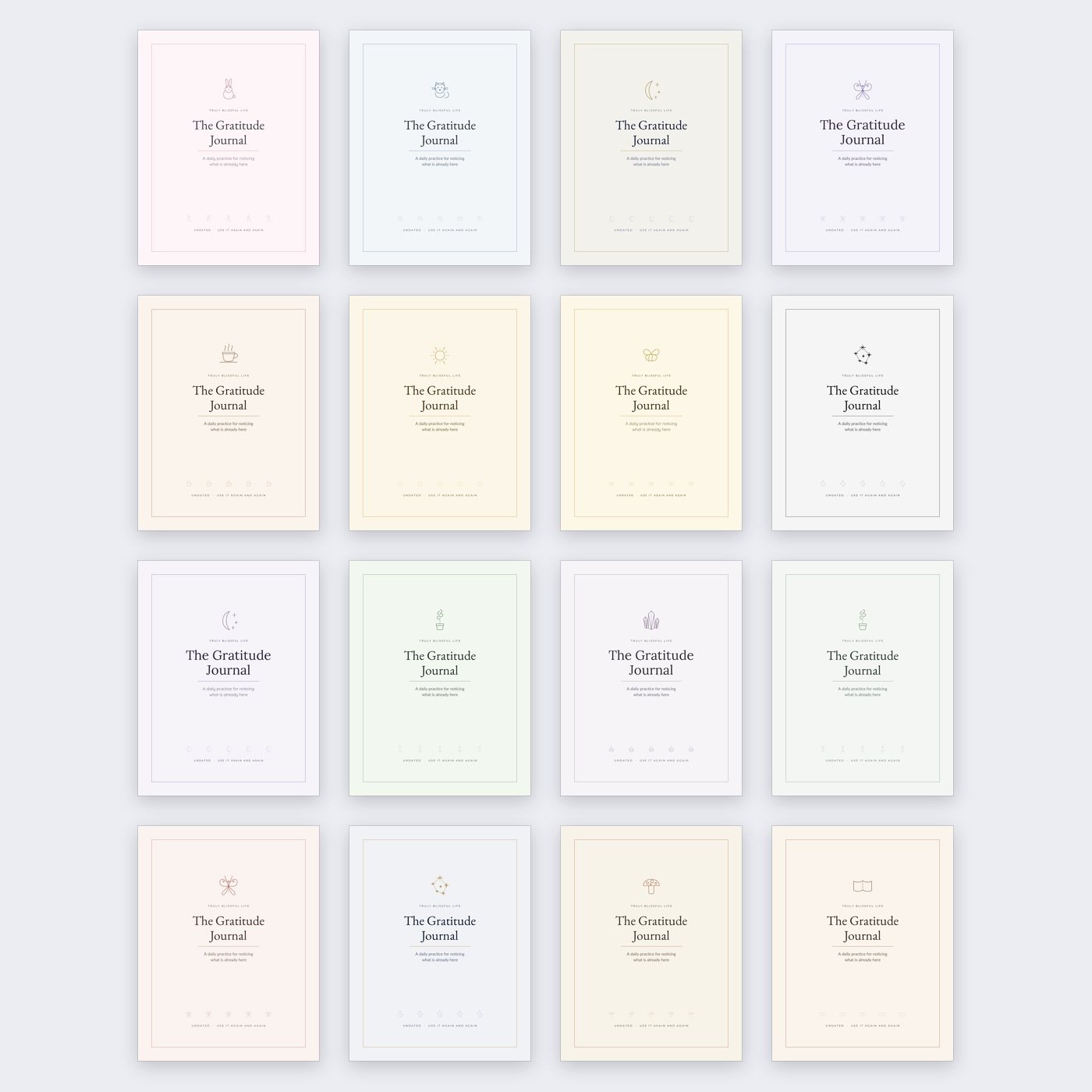
The Gratitude Journal
A different prompt for every day, so you are not writing the same five things by the end of the first week. Printable and undated.
Get the journal — $12