
Why the Usual Advice Lands Badly
Gratitude works by directing attention. What it cannot do is override a genuine situation, and instructing someone in real difficulty to focus on the positive often functions as an instruction to stop mentioning the difficulty.
There is also a specific mechanism that makes it backfire. If the gratitude item is large, it invites comparison to what is wrong, which is also large, and the comparison does not go your way. Being told to be grateful for your health when you have just lost your job produces a list of everything else you have lost.
Small items do not invite that comparison. Nobody weighs a hot shower against a bereavement. That is exactly why small works when large does not.
The First Twenty: Physical and Immediate
- Hot water on demand
- The first mouthful of something warm
- Clean sheets
- A door that locks
- Socks that have not gone thin at the heel
- The heating working
- Painkillers existing
- Sitting down after standing for a long time
- Somebody else having made the coffee
- Being warm while it is cold outside
- The specific weight of a good blanket
- Having eaten today
- Silence, when you can get it
- A shower with no time limit
- Waking up before the alarm and being able to go back to sleep
- Clean drinking water from a tap
- Glasses, contacts, hearing aids, whatever lets you take in the world
- The smell of something cooking that you did not have to cook
- Putting something heavy down
- A bed to get back into
Free download
Weekly Planner Templates
Four printable pages to bring your week back into focus — a weekly overview, intentions and gratitude, a habit tracker, and a weekly reflection. Undated, so you can print them again every week.
Twenty-One to Thirty-Five: Other People
- Someone who texts without needing a reply
- The person who did not ask how you are in the way that requires a performance
- Anyone who has ever covered for you
- A stranger who held a door
- Whoever taught you to cook the one thing you can cook
- Someone who remembers a thing about you that you never told them twice
- A friend you can be silent with
- The colleague who is competent, so you do not have to check
- Anyone who laughed at something you said this month
- Someone who forgave you without making you earn it
- The person whose name you never learned who was kind once
- Whoever is currently keeping something running that you rely on and never think about
- A pet, if you have one, who requires nothing but your presence
- Anyone still in your life after a long time
- The people who did not say the obvious thing when you were struggling
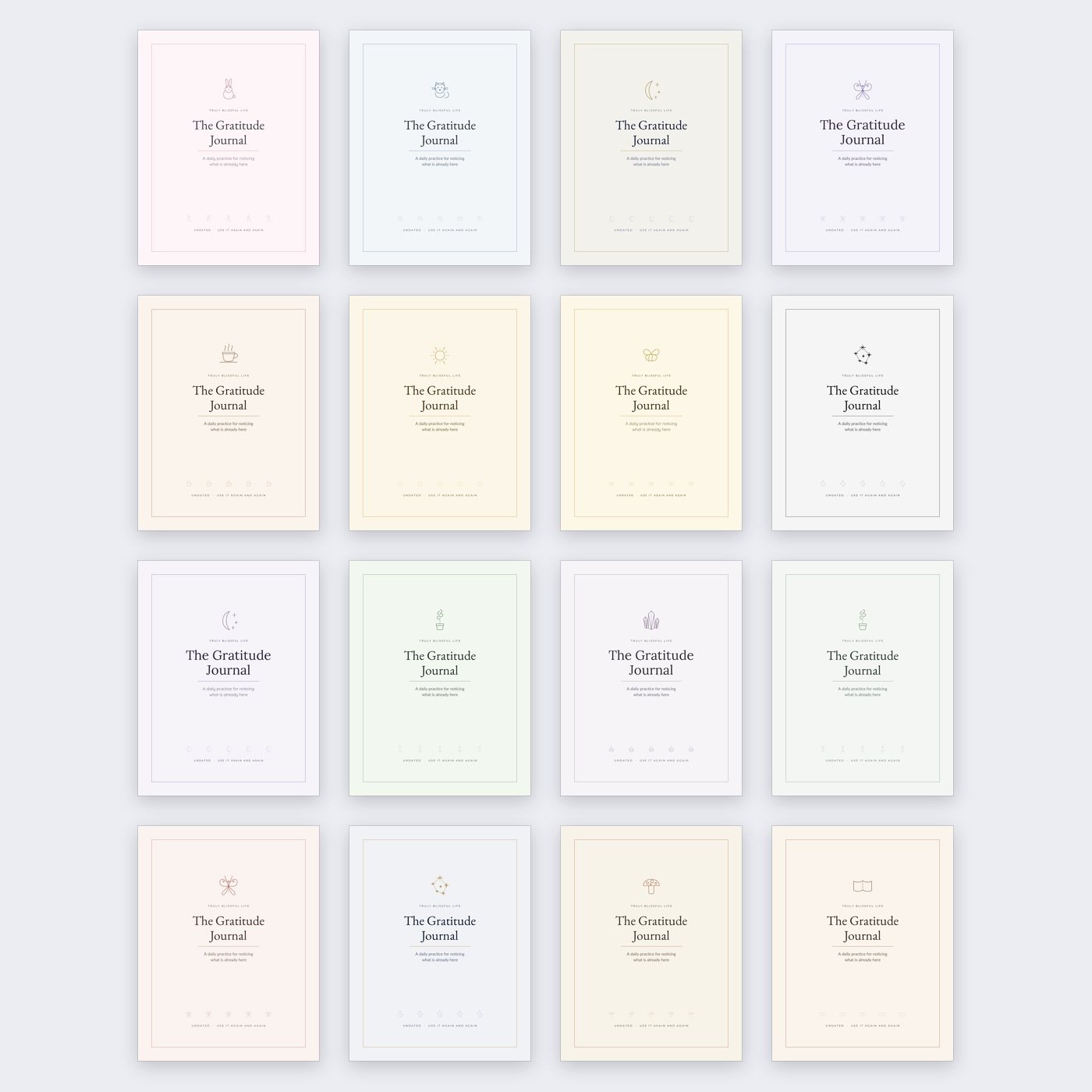
The prompts that keep working are the specific ones, which is exactly what a blank page will not give you. The The Gratitude Journal supplies a different prompt for each day, so you are not writing family and coffee for the eleventh time.
Thirty-Six to Fifty: Everything Else
- Books existing
- The fact that most days end
- Music that you know completely
- Libraries
- The particular light in the late afternoon
- Having somewhere to be
- Not having anywhere to be
- Something you are looking forward to, however small
- Past versions of you who kept going
- Anything you have made that still exists
- Being able to read this
- Weather, as a topic and as an event
- Whatever it is that makes you laugh when you are not in the mood
- The fact that this is a specific season and seasons change
- That you are still counting, which means some part of you is still trying
How to Use a List Like This
Do not read all fifty. Reading a long list of positives in a bad mood produces numbness rather than warmth.
Pick three. Write them out by hand, and next to each one write a single specific detail. Not clean sheets. The blue ones, last Tuesday, after the bad week. The specificity is where the effect lives, and without it you are just copying.
Do it once a day and stop. Ten minutes maximum. Gratitude practice done at length on a hard day tends to turn into an argument with yourself.
The Both-Things Format
For hard periods, this is the format that holds up, and it is the only one worth using when things are genuinely bad.
Write what is hard. All of it, plainly, with no attempt to balance it. Then draw a line, and underneath write: and also. Then one small true thing.
The and also is doing something specific. It does not cancel, minimize, or resolve what is above the line. It only asserts that something else was also true in the same day. That is a much smaller claim than gratitude, and because it is smaller, it is one you can make honestly, which is the only kind that does anything.
From the shop
The Gratitude Journal
Daily pages plus a monthly reread, which is the part that does the work — thirty entries together show you a month you would otherwise call fine.
Get the journal — $12